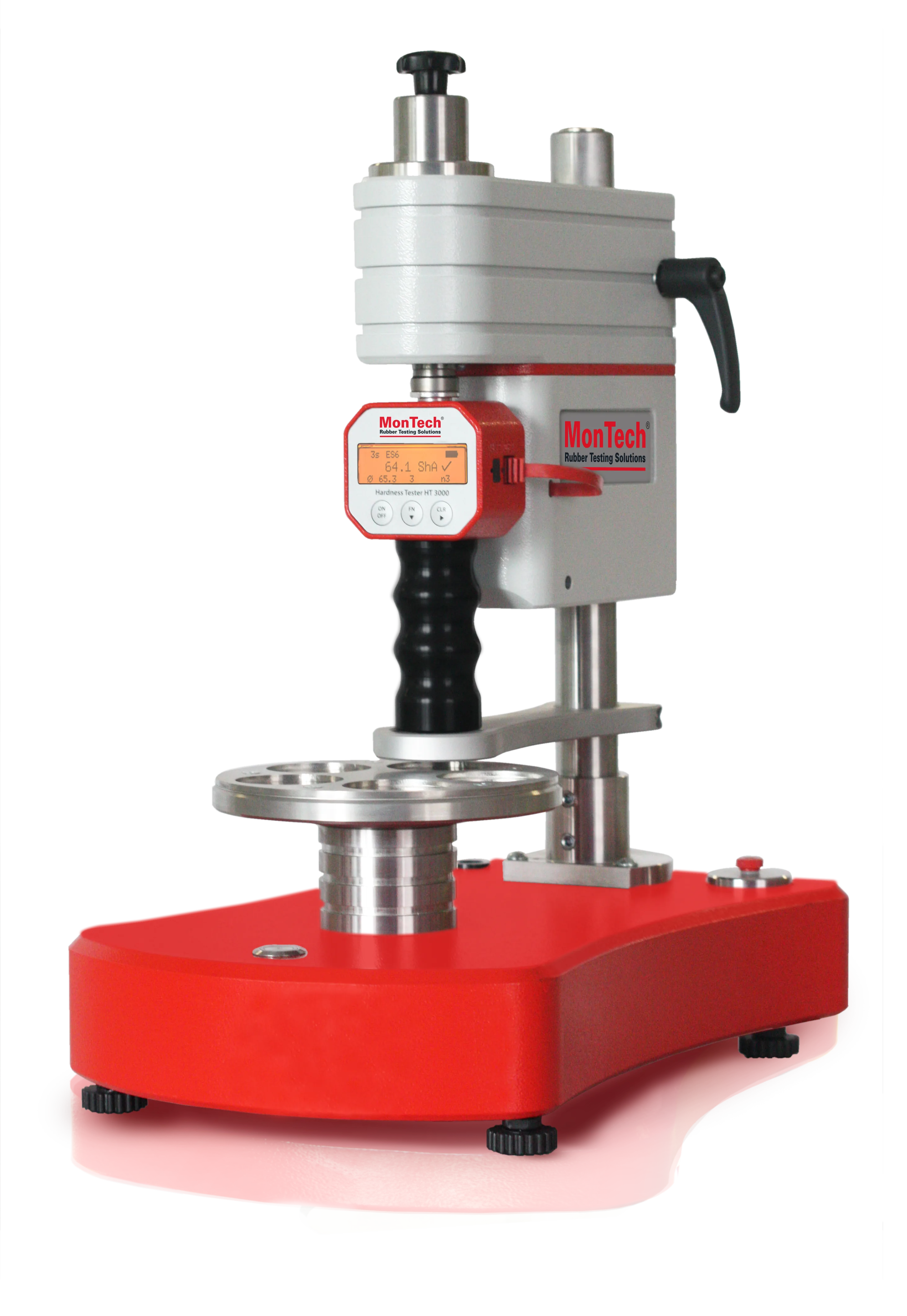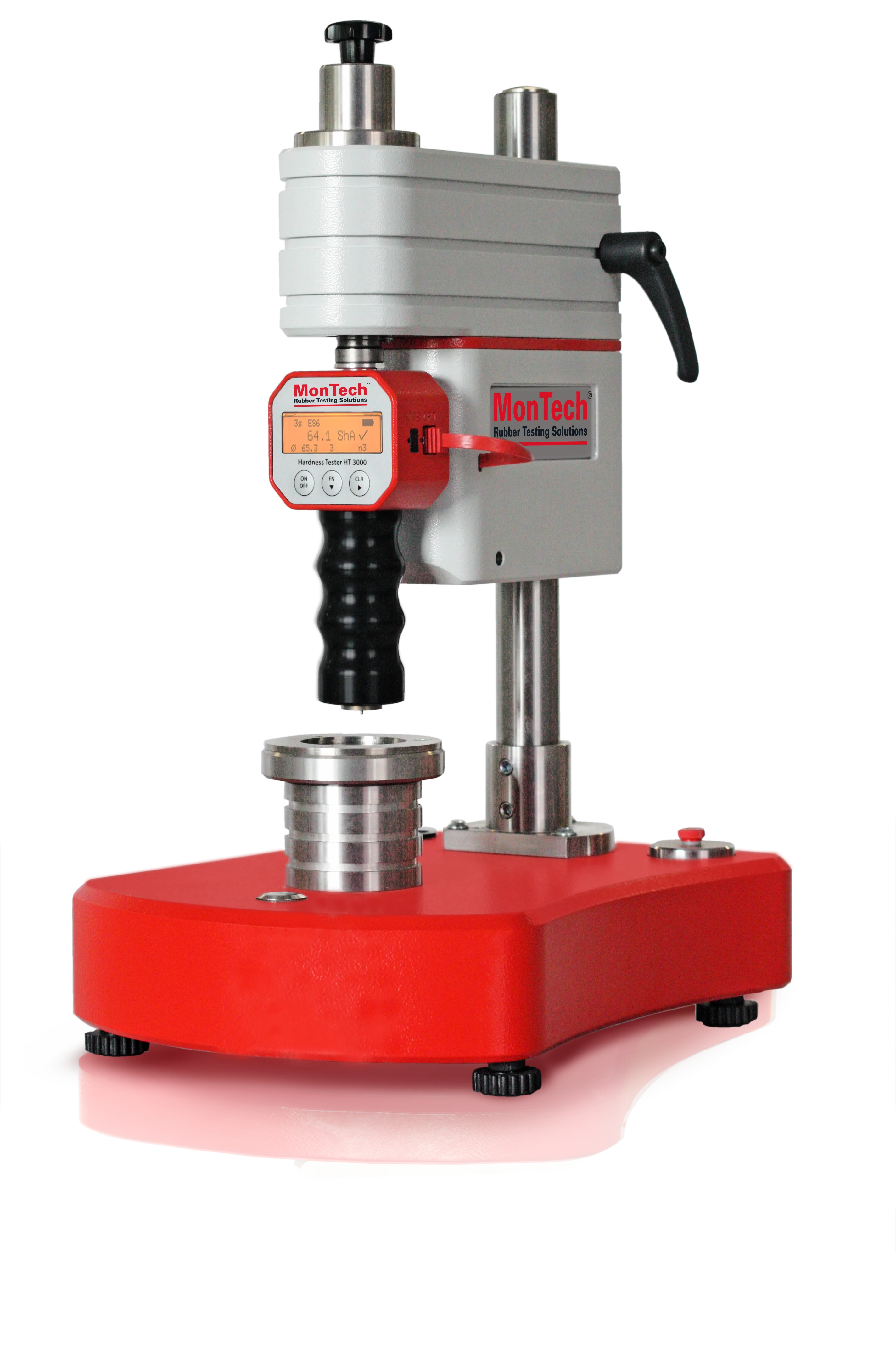
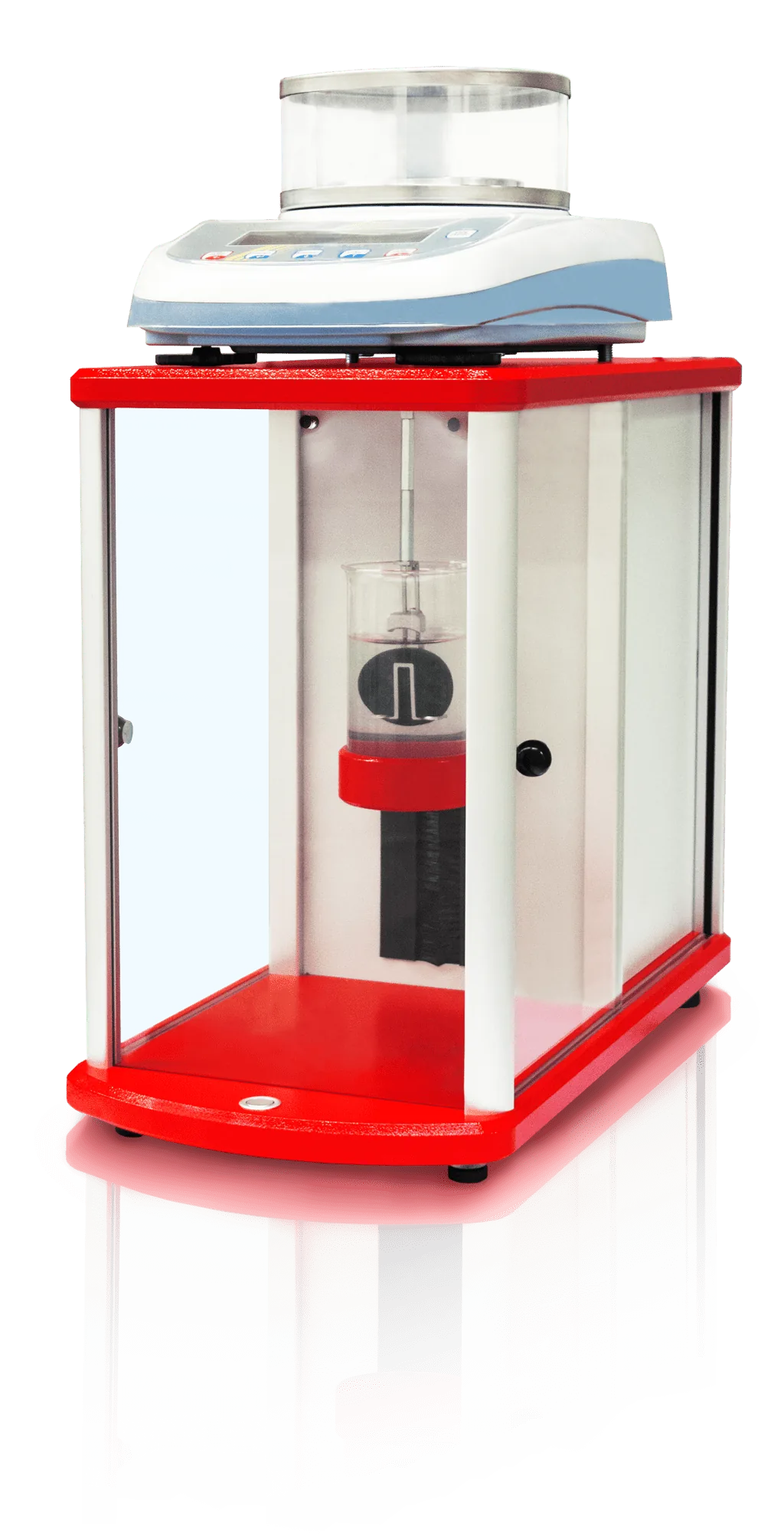
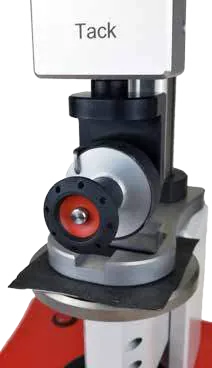
HT 3000 Modular Tack & Force testing system
MonTech · Tack and Force
The revolutionary HT 3000 Modular Tack testing system is a new, highly efficient and reliable procedure for the determination of the tackiness of rubber materials. Designed for a variety of applications – not only for the tire industry – the system is capable of determining the tackiness / autohesion (static friction force) rubber and polymer materials. Tack testing allows to precisely distinguish
Datasheets
The revolutionary HT 3000 Modular Tack testing system is a new, highly efficient and reliable procedure for the determination of the tackiness of rubber materials. Designed for a variety of applications – not only for the tire industry – the system is capable of determining the tackiness / autohesion (static friction force) rubber and polymer materials. Tack testing allows to precisely distinguish between different polymers, tackifiers or fillers provided from different sources and between different batches. The Tack testing head has simply been designed as an additional testing head for the HT 3000 Modular system - intuitively increasing the testing capabilities of system which is traditionally used for flexible hardness testing applications - minimizing total investment costs and saving precious space in the laboratory. Typical tack testing applications include: Roughness of surfaces Rubber A flow process under pressure (macroscopic) Rubber B Rubber A Diffusion of polymer chains, chain ends (microscopic) Rubber B Rubber A Destruction test – destruction of autohesion bonding, surface of fracture at some point other than the original surface Rubber B Newly formed surface after destruction The modular sample holder and test support design provides a flexible changeover for different test setups: The unique sample holder design of the MonTech Tack testing system eliminates traditional challenges like imperfect contact areas due to trapped air and allows for a simple repetitive or multi reading procedure by a rotating specimen holder. The fully automated test process guarantees higher throughput, simplified sample preparation and higher accuracy compared to traditional tack testing methods such a T-Peel and rolling ball tests. Test procedure definition and data acquisition: Tack testing procedure are simple to setup as the entire testing process is controlled by the MonLink software allowing to easily create multi step and multi stage test procedures allowing highest flexibility and test parameters and measurement setups:
Key features
• Determination of the tackiness (autohesion) of „Green Tires“
• Stickiness and Tackiness of epoxy resins (adhesion and autohesion)
• Adhesion testing of components such as calendered materials against each other or against fabrics
• Tackiness of varnish/paint work
• Pull and attraction forces of magnets
• Cured rubber samples vs. standard surfaces (polished steel, tar, abrasives, glass...)
• Green samples vs. standard surfaces (films, papers, talcum, fabrics, ...)
• Tackiness of epoxy resins (autohesion)
• Adhesion testing of component segments such as calendered materials against each other or against fabrics
• Pull and attraction forces of any materials against other materials or surfaces
• Absolute values of deformation, force, initial sample length L0, time and speed can be defined for each measurement step
• Variation of the following parameters: pressing force, pressing time, pressing speed, separation speed with closed loop control
• Determination of the peel force („tack“ force) to the separation
• Storage of the raw data curves and calculated value, graphical presentation and reporting